
Most people walk into a gym with vague hopes rather than concrete fitness goals. They want to feel better or look healthier but lack the specific targets that drive real progress. Without clearly defined fitness goals, motivation fades quickly and results remain frustratingly out of reach. This guide shows Toronto and Davisville residents exactly how to define meaningful fitness goals and set them effectively using proven frameworks. You’ll discover practical methods to track progress, adjust your approach, and leverage local resources to achieve lasting health improvements that fit your lifestyle.
Table of Contents
- Key takeaways
- What are fitness goals and why do they matter?
- Types of fitness goals and examples for personal health
- How to set SMART fitness goals that work for you
- Tracking and adjusting your fitness goals for ongoing success
- Achieve your fitness goals with expert support in Toronto
- Frequently asked questions
Key Takeaways for Defining and Setting Fitness Goals
| Point | Details |
|---|---|
| Clear fitness goals | Setting precise targets gives direction, measurability, and accountability to your workouts. |
| SMART goal framework | Using Specific, Measurable, Achievable, Relevant and Time bound criteria helps you craft targets that are realistic and trackable. |
| Progress tracking locally | Local progress tracking tools and methods help you monitor gains, adjust plans, and stay motivated. |
| Professional support matters | Working with local trainers or coaches provides personalised guidance, accountability and expertise to reach targets. |
What are defined fitness goals, and why do they matter?
Defined fitness goals are specific, intentional targets you set for improving your physical health and wellness. They transform abstract desires like getting healthier into concrete objectives such as completing a 5K run or performing ten proper push-ups. Clearly defined fitness goals provide direction and measurability essential for success in exercise programmes.
These targets matter because they create structure for your training efforts. When you know exactly what you’re working towards, every workout session has purpose. You can measure whether you’re moving closer to your target or need to adjust your approach. Goals also boost commitment by giving you something tangible to achieve rather than just showing up at the gym without direction.
Many Toronto residents mistakenly believe that simply joining a gym or starting to exercise equals having fitness goals. This misconception leads to inconsistent effort and disappointing results. Vague intentions like wanting to be fitter provide no way to measure success or failure. Without measurement, you cannot identify progress or know when you’ve actually achieved something meaningful.
Properly structured fitness goals deliver several critical benefits:
- Enhanced motivation through visible progress towards specific milestones
- Improved focus by eliminating wasted effort on ineffective activities
- Greater accountability when targets have clear deadlines
- Increased confidence as you achieve successive objectives
Local Toronto trainers consistently emphasise this principle:
Setting precise fitness goals transforms wishful thinking into achievable outcomes. Clients who define clear targets stay engaged longer and achieve better results than those who exercise without direction.
The difference between success and frustration often comes down to goal clarity. When you work with finding personal trainers in Toronto, they’ll help you establish these crucial targets based on your current fitness level and desired outcomes.
Types of Fitness Goals and Examples for Personal Health
Fitness goals fall into several distinct categories, each addressing different aspects of physical wellness. Understanding these types helps you identify which goals align with your personal health priorities and lifestyle in Davisville and Toronto.
Strength goals focus on building muscular power and endurance. Examples include lifting a specific weight, performing bodyweight exercises like pull-ups, or carrying groceries without strain. These goals improve daily function and protect against injury as you age.
Endurance goals target cardiovascular fitness and stamina. You might aim to run a certain distance, cycle for a set duration, or complete a fitness class without excessive fatigue. Endurance improvements support heart health and increase energy levels for daily activities.

Selecting Your Goal Type
Flexibility goals emphasise range of motion and joint health. Touching your toes, holding yoga poses, or reducing stiffness after sitting all day represent flexibility targets. These goals become increasingly important for preventing pain and maintaining mobility.
Weight management goals involve reaching or maintaining a healthy body composition. Different fitness goals require tailored exercise programmes for best outcomes. Whether you want to lose excess weight, gain muscle mass, or maintain current composition, these goals often combine exercise with nutrition coaching programmes in Toronto.
Mental wellness goals recognise fitness benefits beyond physical changes. Reducing stress through regular exercise, improving sleep quality, or boosting mood represent valid fitness objectives that significantly impact overall health.
When selecting which goals to pursue, consider these prioritisation factors:
- Current health status and any physical limitations
- Available time for training each week
- Access to equipment or facilities in your area
- Personal interests and enjoyment preferences
- Long-term health concerns you want to address
| Goal type | Primary benefit | Recommended Toronto activity |
|---|---|---|
| Strength | Muscle building, injury prevention | Resistance training at local gyms |
| Endurance | Heart health, stamina | Running trails, cycling routes |
| Flexibility | Mobility, pain reduction | Yoga studios, stretching classes |
| Weight management | Body composition, metabolic health | Combined cardio and strength programmes |
| Mental wellness | Stress relief, mood improvement | Group fitness classes, outdoor activities |
Most successful fitness plans incorporate multiple goal types rather than focusing exclusively on one area. A balanced approach addresses different wellness dimensions and creates more sustainable results.
How to set SMART, defined and set fitness goals that work for you
The SMART framework transforms vague fitness intentions into actionable targets that drive results. Each letter represents a crucial characteristic your goals should possess.
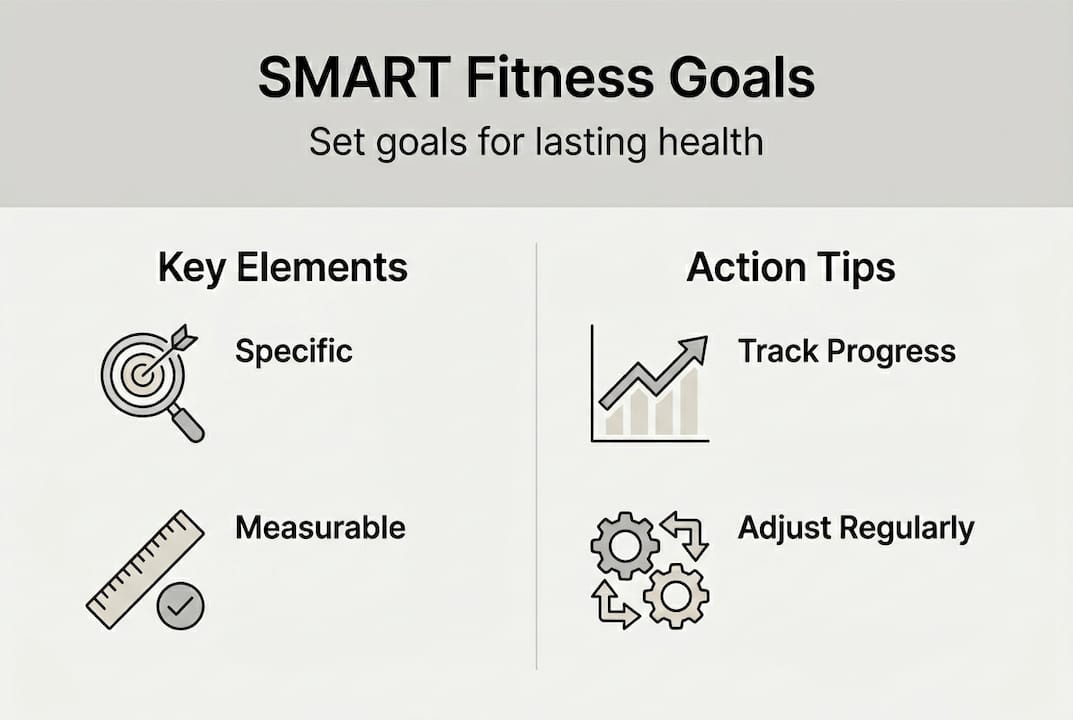
Specific goals clearly define what you want to achieve. Instead of wanting to get stronger, specify that you’ll perform five unassisted pull-ups. Rather than improving endurance generally, target completing a 30-minute run without walking breaks. Specificity eliminates ambiguity and makes success obvious.
Measurable goals include quantifiable criteria for tracking progress. You need concrete numbers, distances, times, or repetitions to evaluate whether you’re advancing towards your target. Measurements might include weight lifted, kilometres run, flexibility range, or body measurements.
Achievable goals stretch your current abilities without being impossible. Using SMART criteria increases effectiveness and enhances adherence to training plans. Setting a goal to run a marathon next month when you currently cannot run 5K sets you up for failure and discouragement. Start with challenging but realistic targets based on your present fitness level.
Relevant goals align with your broader health priorities and lifestyle. If you have knee problems, setting a goal focused on high-impact jumping exercises makes little sense. Choose objectives that matter to your personal wellness needs and fit within your life constraints.
Time-bound goals include specific deadlines that create urgency and structure. Open-ended targets lack the motivational push of approaching deadlines. Set completion dates that allow adequate training time whilst maintaining momentum.
Simple Steps to Achieve Your Defined and Sets SMART Fitness Goal
Follow these steps to craft your SMART fitness goal:
- Identify your primary fitness priority right now
- Define the specific outcome you want to achieve
- Determine how you’ll measure progress towards that outcome
- Assess whether the goal challenges you appropriately given current abilities
- Confirm the goal addresses your actual health needs and interests
- Set a realistic deadline accounting for Toronto’s seasonal weather patterns
- Write your complete SMART goal statement
Pro Tip: Break larger fitness goals into smaller monthly milestones to maintain motivation throughout Toronto’s long winter. Achieving frequent small wins keeps you engaged when winter workout consistency becomes challenging.
A properly constructed SMART goal might read: I will complete a 5K run in under 35 minutes by June 30th, 2026, by following a structured training programme three times weekly. This statement includes every SMART element and provides clear direction for your training efforts.
Tracking and Adjusting Your Defined and Set Fitness Goals
Progress tracking transforms abstract effort into concrete evidence of improvement. Without measurement, you cannot distinguish between effective and ineffective training approaches or know when to modify your strategy.
Several tracking methods suit different preferences and goal types. Fitness journals provide simple, low-tech documentation of workouts, measurements, and observations. Recording exercises, sets, repetitions, and how you felt creates a valuable reference for identifying patterns and progress over time.
Smartphone applications offer convenient digital tracking with automated calculations and visual progress charts. Many apps sync with wearable devices to capture heart rate, steps, calories, and sleep quality. Popular options include fitness-specific platforms and general health tracking tools.
Professional assessments deliver objective measurements that home tracking cannot match. Regular progress tracking supports sustained motivation and successful achievement of fitness goals. Fitness facilities in Davisville and Toronto offer body composition analysis, cardiovascular fitness testing, and strength assessments that provide precise baseline and progress data.
Different Tracking Methods For Your Fitness Goals
| Tracking method | Advantages | Limitations |
|---|---|---|
| Paper journal | Simple, no technology required, flexible format | No automated calculations, easy to forget |
| Smartphone apps | Convenient, automated tracking, visual charts | Requires device, learning curve, battery dependent |
| Wearable devices | Continuous monitoring, activity reminders, sleep tracking | Cost, accuracy varies, requires charging |
| Professional assessments | Highly accurate, expert interpretation, comprehensive data | Requires appointments, ongoing cost, less frequent |
Effective tracking focuses on metrics directly related to your specific goals. If your goal involves strength, track weights lifted and repetitions completed. For endurance goals, monitor distances, times, and heart rate recovery. Avoid getting distracted by irrelevant measurements that don’t indicate progress towards your actual target.
Adjusting goals becomes necessary when tracking reveals certain patterns. If you consistently exceed your targets ahead of schedule, increase the challenge to maintain progress momentum. When you repeatedly fall short despite genuine effort, reassess whether the goal was too ambitious or your approach needs modification.
Pro Tip: Schedule monthly review sessions to analyze your tracking data and decide whether to maintain, accelerate, or adjust your current fitness goals. Consult with Toronto fitness trainers during these reviews for objective feedback and expert recommendations.
Recognize that plateaus are normal parts of fitness progression. When improvement stalls despite consistent effort, changing your training approach often reignites progress. This might involve adjusting exercise selection, training frequency, intensity levels, or recovery practices.
Achieve Your Defined Fitness Goals with Expert Support in Toronto
Defining and tracking fitness goals yourself builds valuable self-awareness, but professional guidance accelerates your success significantly. Working with experienced personal trainers in Toronto provides accountability, expertise, and personalized strategies that self-directed efforts cannot match.
Striation 6 offers comprehensive support for Davisville Village residents ready to transform fitness intentions into achieved goals. Our Toronto fitness trainers specialize in creating customized programmes based on your specific objectives, current abilities, and lifestyle constraints. During your complimentary consultation, we’ll help you define clear, achievable targets and design the training approach to reach them efficiently. Our boutique facility provides the equipment, expertise, and supportive environment that keep you motivated through every stage of your fitness journey. Explore our Toronto gym membership options, including trial offers that let you experience our client-centred approach risk-free.
Frequently Asked Questions About Defining and Setting Fitness Goals
Start by honestly assessing how much time you can consistently dedicate to exercise each week, then set goals achievable within that schedule. Prioritize consistency over intensity by choosing smaller, sustainable targets rather than ambitious goals requiring unrealistic time commitments. Local community gyms and flexible training options help you maintain progress despite busy schedules.
Use smartphone fitness apps that automatically log workouts and calculate progress towards your targets. Wearable devices provide continuous activity monitoring throughout your day. Many residents find success with simple paper journals recording key workout details. Using fitness tracking tips Toronto resources, and feedback from local fitness classes adds a valuable, objective assessment.
Review your goals every four to six weeks or immediately after reaching significant milestones. Regular assessment helps you recognize when to increase challenge levels or modify approaches that aren’t producing expected results. Seek a Toronto fitness consultation when progress plateaus or your priorities shift to ensure your goals remain aligned with your evolving needs.
Recommended
- Metabolic Balance Coaching and Nutrition for Longevity | Striation 6
- Toronto Nutrition Coaching | Metabolic Nutrition Coaching
- Find a Toronto Personal Trainer with Striation 6 | Personal Fitness Trainers in Davisville | Striation 6
- Winter Workouts in Toronto: 3 Tips to Stay Consistent | Striation 6 Toronto Gym

Diamond-Level Toronto Personal Trainer & Co-Founder of Striation6
I help people experiencing pain and who might confused or concerned about how to exercise in safe, effective manner using Muscle System Work and providing customized, fun and effortful exercise that makes bad stuff in your body feel better and the good stuff feel great.
As the founder of Striation 6 and an Exercise Professional with more than 20 years of experience, it is important to me that I set the example of our Mission: to help as many people as possible feel, function, look and live better through exercise.