
TL;DR:
- Personalized, achievable workout plans better ensure long-term adherence than generic routines.
- Balancing resistance, cardio, flexibility, and rest is key for sustainable fitness progress.
- Consistency and gradual progression outweigh workout complexity or intensity for most learners.
Starting a fitness routine in Toronto sounds simple until real life gets in the way. Busy commutes on the TTC, long winters, old injuries that flare up, and a flood of conflicting advice online can leave even motivated Davisville residents feeling stuck before they begin. Cookie-cutter plans pulled from generic fitness sites rarely account for your history, your schedule, or your actual goals. This guide walks you through a clear, evidence-based process for building a personalised workout plan that actually fits your life, whether you’re a complete beginner or returning after time off.
Table of Contents
- Start with your goals, history, and needs
- Outline your weekly workout structure
- Choose exercises and plan your sessions
- Adapt and progress safely for long-term results
- Our perspective: What everyone misses about workout plans
- Ready to build your own plan? Get support in Toronto
- Frequently asked questions
Key Takeaways
| Point | Details |
|---|---|
| Personalization matters | A plan matched to your goals, experience, and health needs will be the most effective and sustainable. |
| Simple structure wins | Consistency with basic full-body routines delivers more progress than overcomplicating your workouts. |
| Progress safely | Gradually increase weight, reps, or challenge and adjust if injured for steady gains without setbacks. |
| Local support helps | Toronto trainers and classes provide motivation and custom adjustments so your plan actually sticks. |
Start with your goals, history, and needs
Before you write a single workout, you need to understand your starting point. This is where most people skip ahead and then wonder why they quit after three weeks. Taking stock of where you are today is what separates a sustainable plan from one that collects dust.
Begin by naming a specific goal. Vague intentions like “get fit” rarely translate into consistent action. Instead, aim for something measurable:
- Strength: lift heavier, feel more capable in daily life
- Recovery: rebuild after surgery, injury, or a long break
- Endurance: run a 5K, keep up with your kids, or improve cardiovascular health
- Muscle tone: change your body composition gradually
- Mobility: move without pain, improve posture, age well
Once your goal is clear, review your health history honestly. Have you had a knee injury, back problems, or a shoulder that limits overhead movements? Current activity level matters too. Someone who walks daily is in a very different place than someone sedentary for a year. Assessing individual needs, goals, and injury history before building any plan is one of the core mechanics behind effective programming.
For Davisville and Toronto residents specifically, lifestyle context matters. Do you have access to a gym near Mount Pleasant, or are you working out at home? Are your mornings free, or are evenings more realistic? A beginner might start with two full-body sessions a week, while someone returning after injury may need modified movements and closer attention to form. If you have a complex injury history, start personal training with a professional before going solo.
Pro Tip: If your health history includes more than one injury or a chronic condition, consult a physiotherapist or certified trainer before building your programme. A 30-minute session could save you months of setbacks.
Outline your weekly workout structure
With your goals and constraints mapped out, translate them into a weekly template. A balanced week for most Toronto residents will include resistance training, some cardio, and time for flexibility and recovery. You don’t need to train every day to see results.
Here is a simple comparison of training approaches based on ACSM 2026 guidelines:
| Training goal | Sets | Reps | Load | Frequency |
|---|---|---|---|---|
| Strength | 2-3 | 3-6 | ≥80% 1RM | 2-3x/week |
| Hypertrophy | 3-5 | 6-12 | ~70% 1RM | 2-4x/week |
| General fitness | 2-3 | 10-15 | 60-70% 1RM | 2-3x/week |
To sketch your first week, follow these steps:
- Choose 2-3 days for resistance training, spaced at least one day apart.
- Add 1-2 sessions of moderate cardio (walking, cycling, swimming).
- Include at least one dedicated mobility or stretching session.
- Leave 1-2 full rest days. Rest is where adaptation actually happens.
- Write it into your calendar like any other appointment.
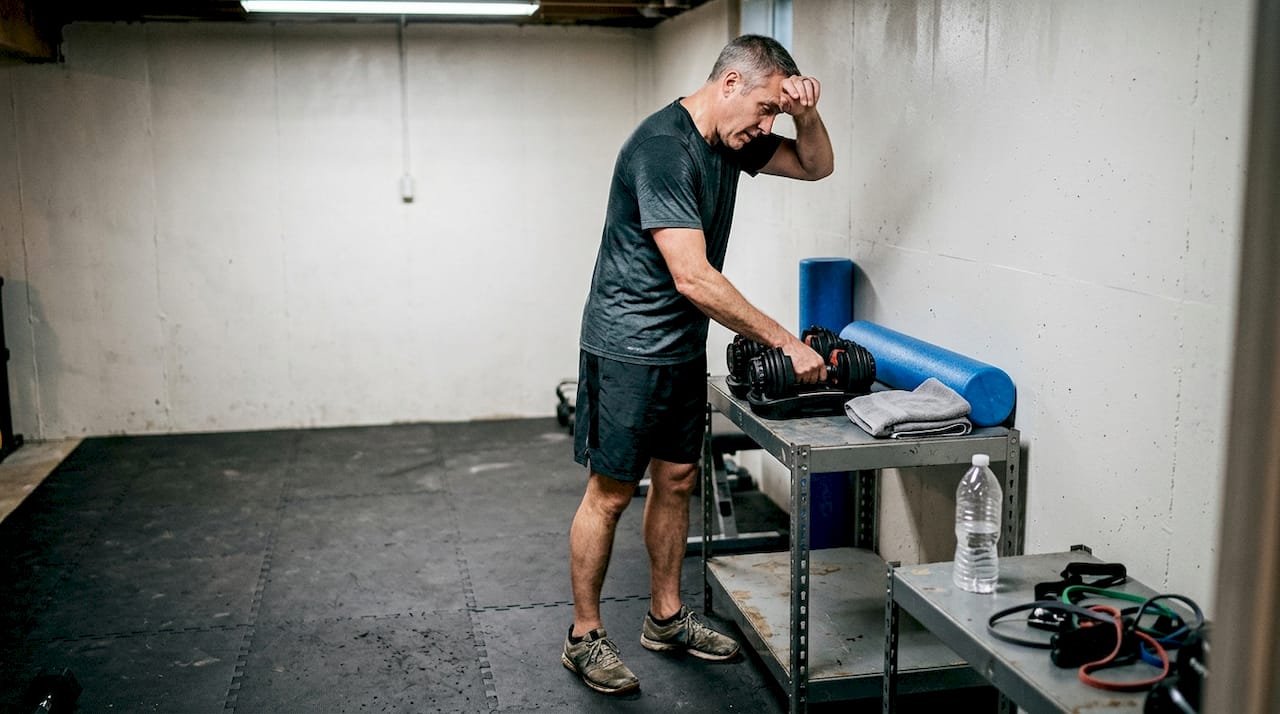
The benefits of quality fitness equipment matter here too. Whether you’re at a Davisville gym or training at home, having access to the right tools supports safe progression.
Pro Tip: Consistency beats advanced programming every time. A simple plan you follow for 12 weeks will outperform a complex one you abandon after two. Don’t let a busy week derail the whole month.
Choose exercises and plan your sessions
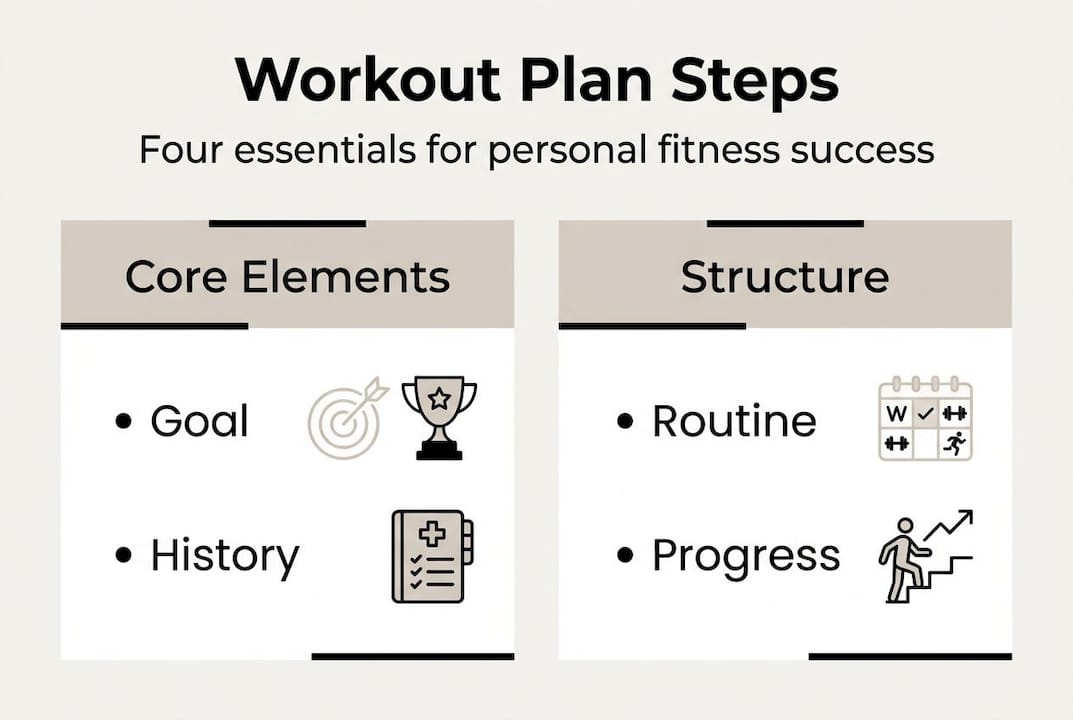
With a weekly structure in place, it’s time to fill in the details. The most effective approach for most people is to start with compound movements, which work multiple muscle groups at once, before adding accessory exercises tailored to your specific goal.
Compound movements to prioritise:
- Squat variations: goblet squat, bodyweight squat, leg press
- Push movements: push-up, dumbbell press, overhead press
- Pull movements: row, lat pulldown, resistance band pull
- Hip hinge: deadlift variation, glute bridge, Romanian deadlift
Here are three sample session templates based on ability:
| Template | Exercises | Sets/Reps | Notes |
|---|---|---|---|
| Beginner (full-body) | Squat, row, push-up, glute bridge | 3 x 10-12 | 60-80% effort, form focus |
| After injury | Seated leg press, band row, wall push-up | 2 x 12-15 | Low load, pain-free range |
| Intermediate | Deadlift, bench press, pull-up, lunge | 3-4 x 6-10 | Progressive overload weekly |
For beginners using full-body routines two to three days per week, research from a review of over 30,000 participants consistently shows that consistency drives gains far more than complexity. You don’t need a complicated split to see real progress.
Form and safety checkpoints:
- Never train through sharp or joint pain
- Film yourself occasionally to check form
- Use a spotter or trainer for heavy lifts
- Warm up for at least five minutes before every session
“Consistency and progression matter more than exercise variety for most people.”
If you want access to quality equipment and expert guidance, Muscle System Gym in Toronto offers the kind of environment where beginners feel genuinely welcome. For personalised session design, finding a personal trainer can make a meaningful difference early on.
Adapt and progress safely for long-term results
Now that your sessions are mapped out, the real work is staying consistent and adjusting intelligently as your body and life evolve. Progress is rarely linear, and that’s completely normal.
Here are four reliable ways to measure progress:
- Add weight gradually: even 2-5 pounds more on a lift is forward movement.
- Do more reps: completing 12 reps where you used to do 10 is progress.
- Improve form: cleaner technique means your muscles are doing the work correctly.
- Recovery improves: feeling less sore after familiar workouts signals adaptation.
When life throws curveballs, adjust your plan rather than abandoning it. A minor injury means regressing to a lower-load version of the same movement. A busy month means dropping to two sessions instead of three. Modifying for ability and resting when sore is a sign of smart training, not weakness.
Common mistakes to avoid:
- Skipping rest days because you feel motivated
- Chasing perfection and quitting when one week goes off-plan
- Ignoring pain signals and pushing through injury
For those managing ongoing discomfort, resources on exercise for chronic pain can help you train effectively without aggravating existing issues. And if Toronto winters are derailing your outdoor routine, winter workout strategies can help you stay consistent year-round.
“Progression means patience and steady gains, not quick fixes.” — ACSM
Pro Tip: Short, regular workouts of 30-45 minutes done consistently are far more effective than long, intense sessions done sporadically. Make it easy to show up.
Our perspective: What everyone misses about workout plans
After years of coaching Toronto and Davisville clients, here is what we’ve noticed: most people don’t fail because they lacked the right programme. They fail because the programme didn’t fit their actual life.
Textbook fitness plans assume ideal conditions. They don’t account for a February commute on a packed subway, a knee that flares up after a long week, or the mental load of juggling work and family. Adherence to a sustainable plan tailored to your goals and injury history consistently outperforms any technically superior programme that you won’t follow.
We’ve seen clients thrive with three 40-minute sessions per week and a clear sense of purpose. We’ve also seen talented athletes burn out chasing complexity. The honest truth is that simple works. A plan you’ll follow is always better than a perfect one you won’t. Choosing a personal trainer in Davisville who understands your local context and personal constraints is often the single biggest factor in long-term success.
Ready to build your own plan? Get support in Toronto
You’ve done the thinking. Now it’s time to put that plan into motion with the right support behind you.
At Striation6, we work with Toronto and Davisville residents at every level, from first-timers to those rebuilding after injury. Our Toronto personal trainer team creates individualised plans, guides safe progressions, and keeps you motivated when momentum dips. Explore our Toronto gym membership options, and check out our exercise classes in Toronto for group support and variety. Try your first session free and see what a personalised approach actually feels like.
Frequently asked questions
What is the minimum amount of resistance training per week for health?
Training major muscle groups at least twice a week delivers the most reliable health and fitness results, according to current ACSM guidelines. Starting there and building gradually is the most sustainable approach.
How should I adapt a workout plan if I’m recovering from injury?
Start with lower intensity, prioritise form over load, and progress gradually without pushing through pain. Modifying for your ability and consulting a physiotherapist early can prevent setbacks and speed recovery.
Is it better to do full-body or split routines for beginners?
Full-body routines done two or three times per week are proven most effective for beginners building foundational strength and muscle. Splits are better suited to intermediate and advanced trainees.
What if I can’t stick to my workout plan every week?
Consistency over time matters far more than perfection. A simple, repeatable plan that you follow most weeks will always outperform an ambitious one you can only sustain for a month.
Recommended

Diamond-Level Toronto Personal Trainer & Co-Founder of Striation6
I help people experiencing pain and who might confused or concerned about how to exercise in safe, effective manner using Muscle System Work and providing customized, fun and effortful exercise that makes bad stuff in your body feel better and the good stuff feel great.
As the founder of Striation 6 and an Exercise Professional with more than 20 years of experience, it is important to me that I set the example of our Mission: to help as many people as possible feel, function, look and live better through exercise.